Imagine a machine that can make copies of itself. Not a futuristic sci-fi device from a Star Trek episode, but something that exists right now in workshops, university labs, and garages around the world. It sounds like magic, or perhaps something vaguely unsettling—a robot quietly building another version of itself while you sleep. But this is exactly what the RepRap project set out to achieve back in 2005, and the ripples of that audacious idea are still reshaping our world today.
The Genesis: One Man, One Wild Idea
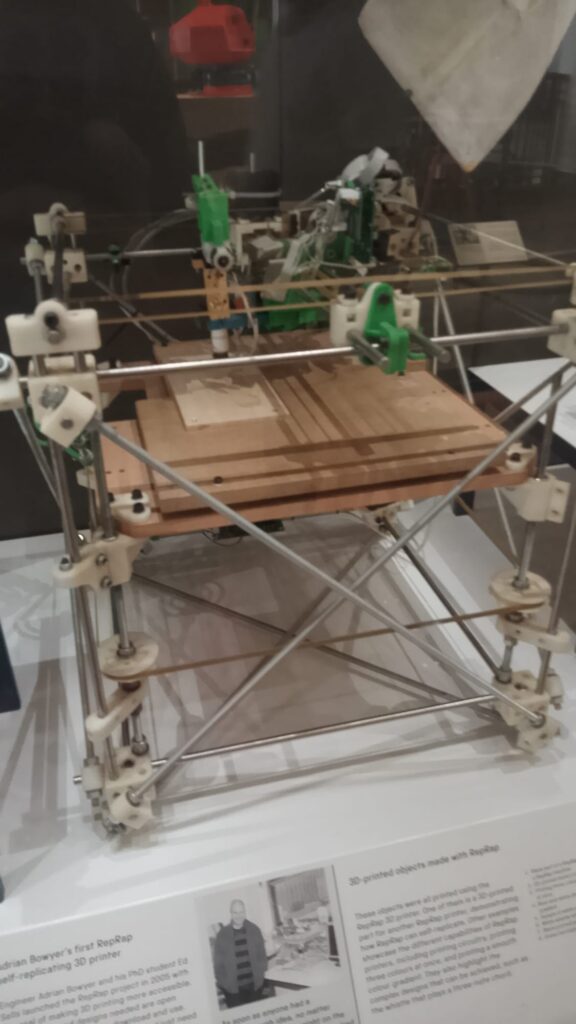
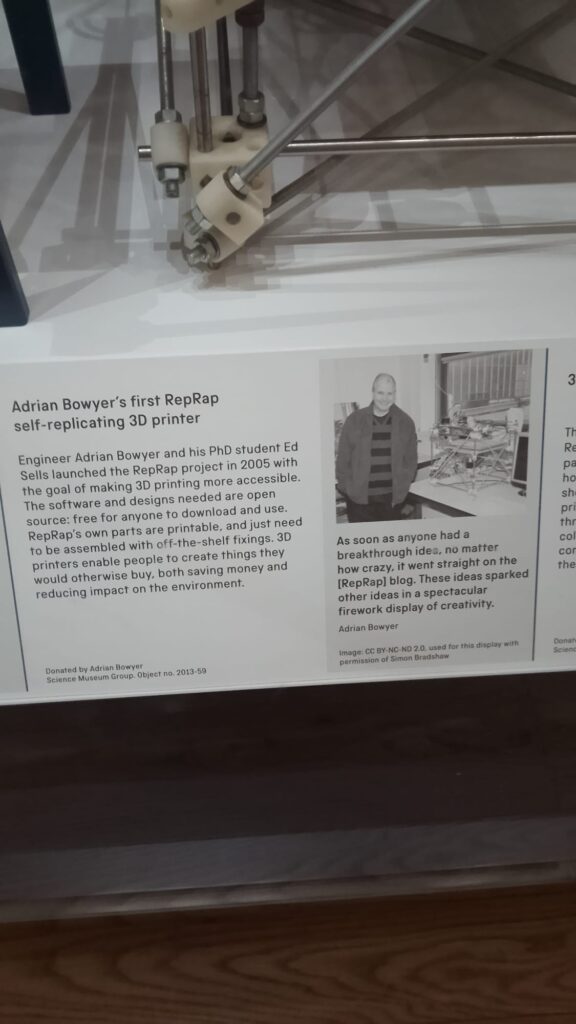
The story begins with Dr. Adrian Bowyer, a Senior Lecturer in mechanical engineering at the University of Bath in England. Bowyer was fascinated by a concept that mathematicians had debated since the 1950s: the “Universal Constructor,” a machine that could self-replicate. The idea had been purely theoretical for decades, but Bowyer saw an opportunity. In 2004, he published his vision online, and by 2005, the RepRap project—short for “Replicating Rapid Prototyper”—was officially born.
What made Bowyer’s approach radical was not just the goal, but the method. He released everything under an open-source license, the GNU General Public License. His reasoning was both practical and philosophical. He later explained that with a powerful technology, a good way to make bad things happen is to divide people into two groups: those who have it and those who do not, and the only way to avoid that is to give it to everyone. He also noted wryly that if you try to patent a machine that copies itself, you are essentially announcing your intention to spend the rest of your life chasing people through the courts who are using the machine for the one thing it was designed to do. That kind of clarity is rare.
The Milestone: When Darwin Became a Parent
The project moved from theory to reality with remarkable speed. On September 13, 2006, the RepRap 0.2 prototype printed a part that was identical to its own—the first time a machine had directly contributed to the creation of another machine like itself. The milestone that truly captured the world’s imagination came on May 29, 2008, when RepRap 1.0, nicknamed “Darwin,” successfully produced a complete set of all its own rapid-prototyped parts. A child machine had been born. And just a couple of hours after its assembly, that child printed its first part—a timing-belt tensioner. The replication was not just symbolic. It was functional.
Bowyer has always been refreshingly honest about the limits of this achievement. He told reporters back in 2008 that not counting nuts and bolts, RepRap could make 60 percent of its parts. The other 40 percent—the stepper motors, the electronic circuit boards, the metal rods, the wiring—still had to be purchased or sourced separately. But that 60 percent figure represented something profound. For the first time in human history, a machine that cost a few hundred dollars could produce the vast majority of the components needed to build another machine just like itself.
How Self-Replication Actually Works
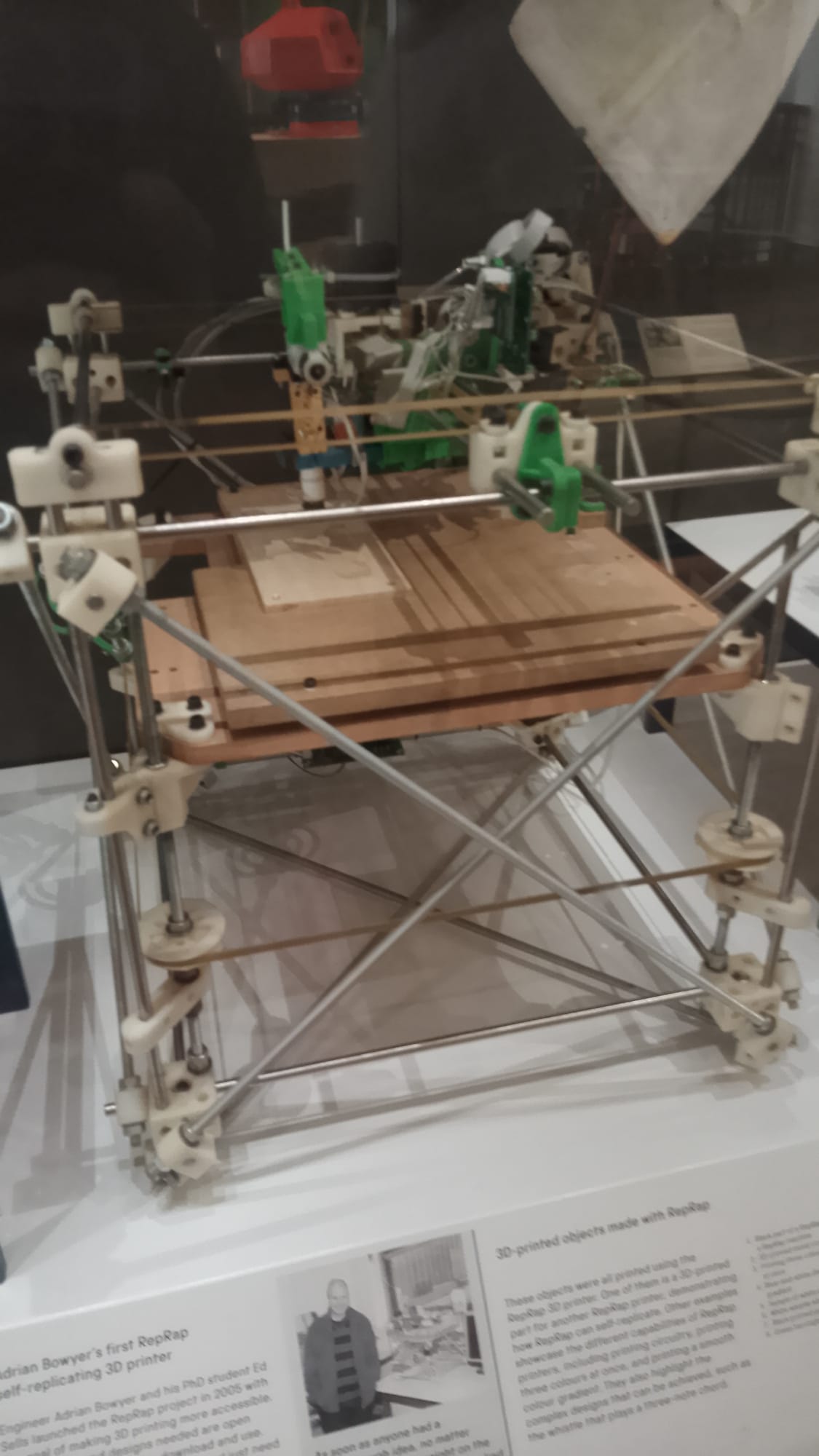
If you have never seen a RepRap printer, here is what it looks like. The structural frame is assembled from threaded steel rods and printed plastic connectors. The extruder carriage slides along printed bearings. The belt tensioners, the filament spool holders, the fan ducts, the knobs, the brackets—all of these are created by the printer itself. You download the digital design files for free, feed them to your existing printer, and wait as it produces what is essentially its own skeleton.
The process is methodical and almost meditative. You print the plastic parts, then gather the non-printable components—the stepper motors, the Arduino-compatible control board, the smooth metal rods, the heated bed, the power supply. Then you assemble everything, calibrate the firmware, much of which is also open source, and suddenly you have a second printer standing next to the first one. That second printer can then go on to build a third. The potential for exponential growth is baked right into the design.
The Three Generations: Darwin, Mendel, and Huxley
The RepRap project evolved through several distinct designs, each named after famous biologists to emphasize the theme of evolution. Darwin, the original, was a cube-like machine that proved the concept but was somewhat bulky. Mendel, the second generation released in 2009, had a distinctive triangular prism shape that improved stability and print quality. Then came Huxley, a miniature version of Mendel with roughly 30 percent of the original print volume. Each generation refined the design, reduced the number of non-printable parts, and made assembly more straightforward.
What is extraordinary is how quickly these designs spread. By September 2008, just months after Darwin achieved self-replication, at least 100 copies had been produced in various countries around the world. The project’s open-source nature meant that anyone with access to a 3D printer could join the replication chain, regardless of whether they lived in a wealthy industrial nation or a remote village with limited supply chains.
The Commercial Revolution You Did Not See Coming
Here is where the story takes an unexpected turn. The RepRap project did not remain a niche hobbyist curiosity. It fundamentally reshaped the entire 3D printing industry. Many of the most successful commercial 3D printer manufacturers today—companies like Prusa Research, Creality, LulzBot, and Ultimaker—either directly descended from RepRap designs or incorporated RepRap-derived technologies into their machines. Josef Průša, the founder of Prusa Research, started as a RepRap contributor. His early printers were essentially refined, user-friendly versions of the Mendel design.
Even the firmware running on millions of printers worldwide, Marlin, traces its lineage directly back to the RepRap project. The open-source ecosystem that RepRap created has proven remarkably resilient. When RepRapPro, one of the commercial arms of the project, announced in January 2016 that it would cease trading due to market congestion and an inability to expand, the Chinese branch continued operating. The project itself, as Bowyer has noted, is essentially finished in the sense that it is now everywhere. The self-replicating printer concept did not disappear. It became the default.
The Unprintable Island: What We Still Cannot Make
Despite all this progress, the dream of a fully self-replicating printer remains frustratingly out of reach. The critical components that cannot be printed fall into three categories, and understanding them reveals the genuine frontiers of this technology.
First, there are the motors. Stepper motors, which precisely control the movement of the print head and build plate, require copper windings, permanent magnets, and precisely machined metal rotors. While researchers have experimented with printed motors—some have recently developed a three-pole DC motor with printed coils and sintered conductive paste—the torque density and precision of printed motors still trail conventional motors by a very wide margin. You can print a motor that technically works. You cannot print a motor that works well enough to control a printer with the accuracy required for self-replication.
Second, there are the electronics. The control board, the microprocessor, the stepper drivers, the wiring harness—these require silicon chips, soldered connections, and conductive traces that cannot yet be produced by a desktop 3D printer. Researchers are making progress with printed conductive traces and even some logic elements, but the gap between what is possible in a laboratory and what is practical for a home user remains vast. The preprint research on printable control and actuation systems is promising, but it acknowledges that the torque density of printed actuators trails conventional motors by a wide margin and that polymer creep complicates long duty cycles.
Third, there are the high-temperature components. The hotend, the nozzle, the heat break—these parts must withstand hundreds of degrees Celsius while maintaining micron-scale precision. Printable plastics simply cannot survive those conditions. Metal components require traditional manufacturing processes, at least for now.
The Current Frontier: Mostly Printable
So where does that leave us? The honest answer is that we have a “mostly printable” 3D printer. You can print the entire structure, all the brackets and covers, the belt tensioners, the filament guides, the spool holders, and even some of the simpler mechanical components like gears and bearing housings. You cannot print the motors, the electronics, or the hotend. One YouTube creator demonstrated this perfectly when he documented his process of 3D printing a tiny CoreXY printer. He printed every plastic component, but he still had to purchase the stepper motors, the control board, the hotend, the metal wire for the motion system, and all the fasteners. His printer was adorable and functional. It was also not fully self-replicating.
This distinction matters because it reveals where the real innovation is happening. Researchers are exploring multi-material printing that could integrate conductive traces and structural polymers in a single build. Others are working on printable sensors and compliant mechanisms that reduce the need for traditional bearings. The goal is not to replace all off-the-shelf components overnight. The goal is to shrink the “unprintable island” until it becomes economically and logistically insignificant.
The Exponential Implications: What Happens When We Succeed
If you want to understand why this technology matters beyond the hobbyist community, consider the exponential growth curve. When a machine can produce another machine that can produce another machine, the replication is not linear. It is exponential. Bowyer himself estimated the odds of success at about fifty-fifty when he started. He later recalled that if it failed, it failed, but if it worked, it would be a resounding success, because everything that copies itself grows exponentially.
This exponential potential has attracted attention from some unexpected quarters. Bowyer, now officially retired but still inventing, has been working on applications ranging from robotic dogs to solid rocket engines. But the most visionary applications are happening off-planet. Bowyer notes that researchers are developing 3D printing systems that work with lunar regolith, the dusty soil covering the Moon’s surface. He explains that on the Moon, there is a vacuum and plenty of sunlight for energy, and the idea of 3D printing buildings might actually be more sensible there than on Earth. A self-replicating printer on the Moon would not need to carry every spare part from Earth. It could simply print what it needed, when it needed it, from local materials.
The same logic applies to disaster relief, remote humanitarian aid, and military logistics. If you can send one printer to a location, and that printer can produce enough of its own parts to create a second printer, you effectively double your manufacturing capacity with no additional shipping cost. The preprint research on distributed manufacturing frames this as both an economic and logistical lever: print it locally, update it digitally, and iterate without waiting for components to arrive.
The Philosophical Question: Are We Building Our Own Successors?
This is where the story takes a slightly uncomfortable turn. Some commentators have begun asking a provocative question: if we teach machines to self-replicate and self-improve, are we building tools that will eventually make us obsolete? The argument goes like this. An AI-controlled printer fleet that can design, print, and assemble its own descendants, each generation slightly more capable than the last, could eventually operate entirely independently of human intervention. At that point, the machines are no longer tools. They are the beginning of a new kind of manufacturing ecology, one that might not need us at all.
This is speculative, certainly. But it is also rooted in Bowyer’s original inspiration. He was explicitly influenced by John von Neumann’s work on Universal Constructors, which was fundamentally about the mathematical conditions for self-replication and evolution. The RepRap project was always intended to demonstrate evolution in this process and to increase in number exponentially. Bowyer never suggested that self-replication would remain under human control forever. He simply believed that open access was the only ethical response to such a powerful technology.
The Legacy: A Quiet Revolution
What is remarkable about the RepRap project, in retrospect, is how quietly it changed the world. There were no dramatic product launches. No billion-dollar valuations. No celebrity endorsements. Just a few dozen engineers, scattered across six continents, sharing design files over the internet and printing plastic parts in their garages. And yet, the consequences have been profound.
The desktop 3D printing industry, now worth billions of dollars, exists largely because Bowyer and his collaborators proved that low-cost, open-source additive manufacturing was possible. The proliferation of printers in schools, libraries, and makerspaces traces directly back to the RepRap project. Even the high-end commercial printers, the ones that cost thousands of dollars and sit in engineering labs, owe a debt to the open-source firmware and design principles that RepRap pioneered.
Bowyer, for his part, seems remarkably at peace with what he started. When asked about the project’s legacy, he notes simply that the project is finished in the sense that it is now everywhere. There are hundreds of designs, people are building the machines, and many of today’s commercial 3D printers are based on their work. He is not boasting. He is stating a fact.
The dream of a fully self-replicating printer remains alive, pursued by researchers and hobbyists who are slowly, steadily shrinking that unprintable island. Whether they will ever completely eliminate it is an open question. But perhaps that is not the point. The point is that the machine that can partially reproduce itself has already changed the world. And the machine that can fully reproduce itself, when it finally arrives, will change it again. The only real question is whether we will be ready.